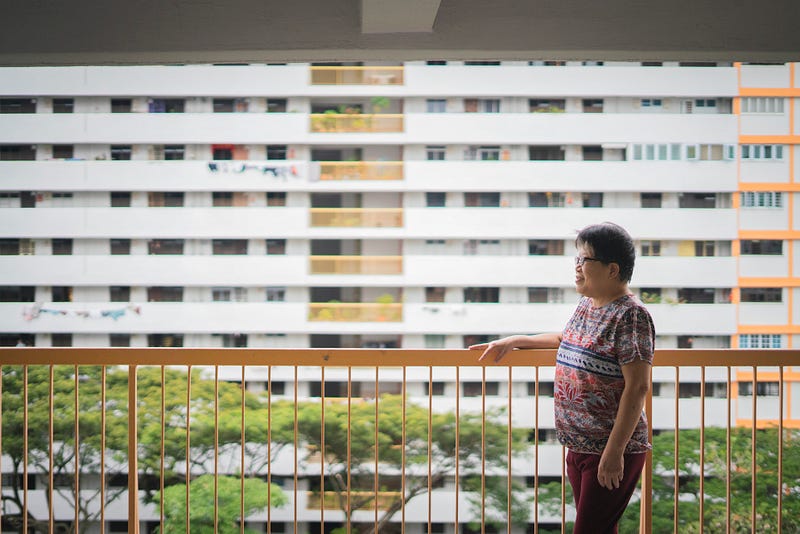
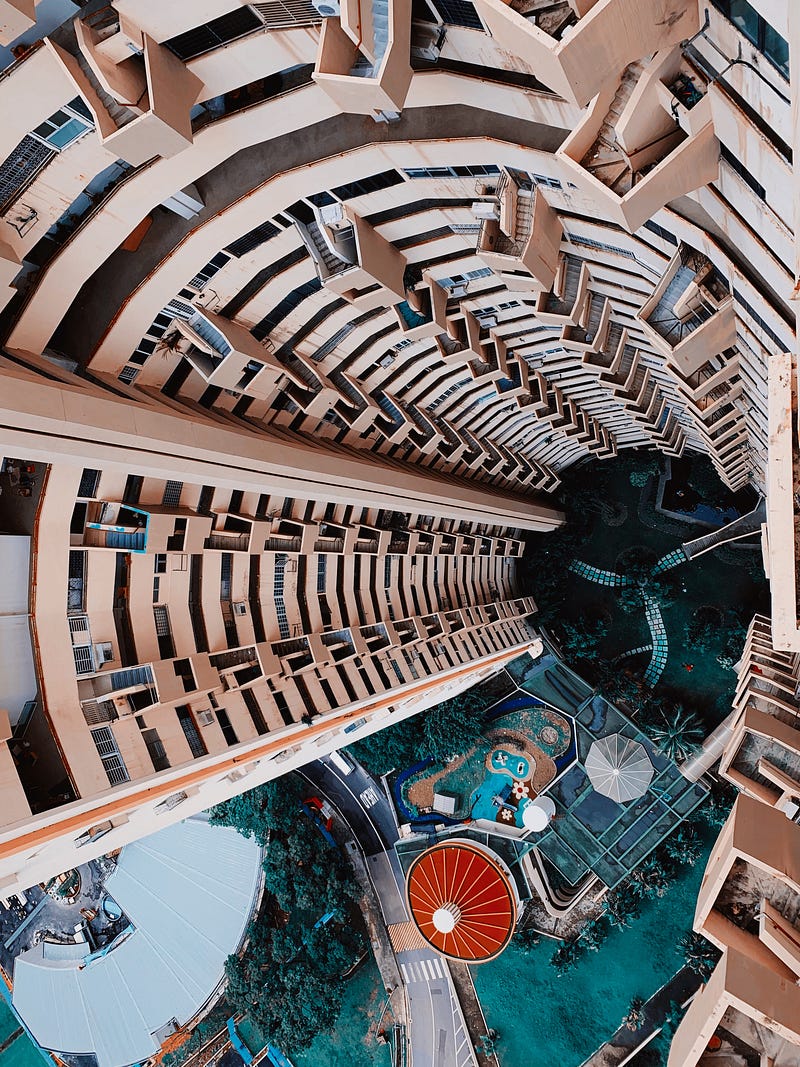
About 8 years ago, when we were trying to buy our first ever property, the agent told us that location was key.
I did not believe him.
The only meaning location carried for us then was the duration of commute to work. And we were prepared to be very very tolerate on that.
We were literally just looking for an affordable property. (Imagine a young couple all by themselves who were drawing entry level salaries and just accumulated enough for a down payment from saving every possible penny)
How the value of property might change was beyond our consideration. Hell, we did not even think about selling the property ever.
7 years later, when we lost more than 100K over the property we picked, I realized he was right.
So much so that I came out with my own reasoning why that was the case. And I wrote a post in this very blog, illustrating my logic from the perspective of “Public Wealth”. (I am sure I am not the one who first came out with this idea. Probably this is discussed in depth in Economics class or Politics class. But I did get that idea without any reference.)
But under Covid and all the “on-line” businesses supported by “Big Data”, how much of that value will still retain in the years to come, especially for Singapore, a small city state?
Let’s break down the value associated to location for a more detailed analysis.
What matters to me are listed below in the order of most important to least important. You can tell how “low” I am. Hahaha…
Do let me know in the comments what I am missing. We can make this as interactive as possible.
Safety
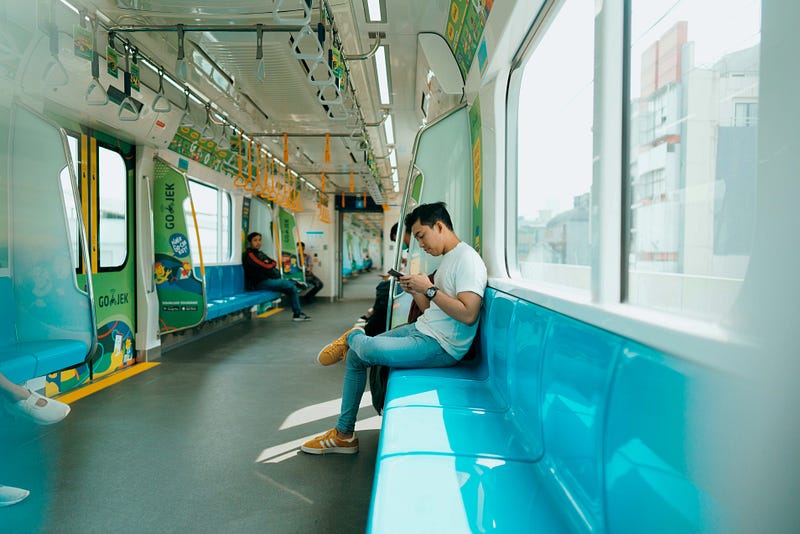
Proximity to MRT/shorter commute
Proximity to good schools
Proximity to amenities, e.g. shopping malls, hospitals, etc
4.Proximity to amenities, e.g. shopping malls, hospitals, etc
With e-commerce developing at such a fast pace, Covid or no Covid, online shopping will become more and more popular.
And the delivery will become faster and faster.
In turn, more and more types of products can be included in e-commerce platform, such as fresh goods, to satisfy more and more of consumers’ needs.
A self-reinforcing flywheel.
What’s more, the “big data” will add so much efficiency to that.
The e-commerce may not know what you will order at any moment.
But they will know roughly how many people in your area will order how many of what products at that moment.
And they can allocate their resources accordingly.
In China, consumers are already getting their orders delivered in a few minutes in some cases.
It will only get sooner.
It is the same with services, such as healthcare.
The digital doctors will be capable of faster and more accurate diagnostic and treatment, as more and more data becomes available and analyzed for the population.
How much do you still need physical shopping malls and hospitals?
So how much of the value of location will still retain in the years to come, especially for Singapore, a small city state?
From what I heard, second-tier cities in China are offering better quality of life, with less expense property prices and slower pace of life and work.
And new “Cultural trend” is emerging from second-tier cities, like popular bands.
So this might be a sign that the location is losing its appeal.
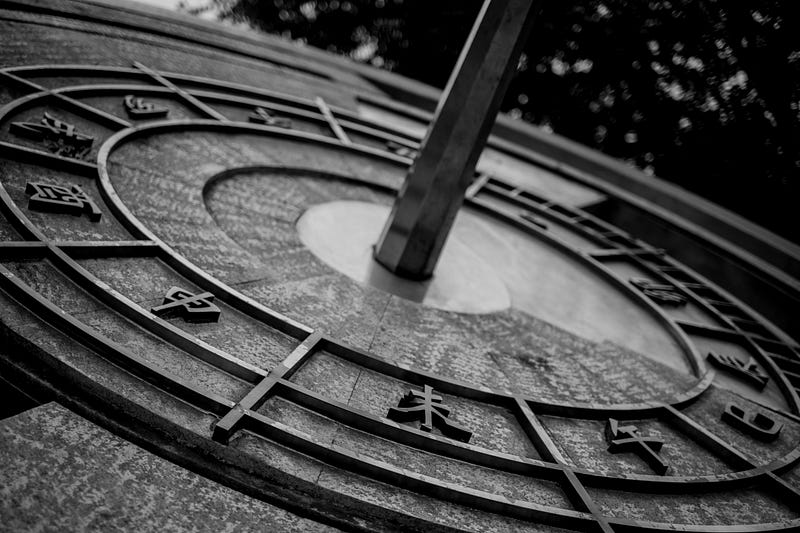
1.Where to find a place where we get sunlight all day long and we could leave our “WIP” sundial for the day?
In the video, the instruction was to fix the sundial in a spot and leave it there all day along.
First of all, we needed to find a place where we would get sunlight all day long.
Second, we needed to be able to leave our staff there.
To find a place where we would get sunlight all day long proved to be more difficult than expected.
Indoors was immediately out.
We thought of car parks and roof top gardens. At least the ones near our place were not ideal, due to either tall buildings or trees.
We looked around and did not find any qualified spot.
The next option we could think of was the beach…
We did not feel like going to the beach and the weather was not exactly “beach” type either.
I could only imagine how easy this would be in the place where I grew up.
Any yard or field or rooftop or small road would do perfectly. There would probably be some curious kids who would just join in the fun and cause some damage.
Anyway, we had to improvise.
I tried to explain to my son that the Sun is so far away from us that the car park, garden and our flat were essentially the same spot and the shadow we got would be essentially the same.
I had to recall a few modules I took in school but eventually he bought the argument, which made the task a bit easier.
We would just go to any place that had sunlight at the time we needed to record down the position of the shadow.
Of course, we needed to ensure the panel was always facing the same direction every time we marked the shadow.
The campus from my phone helped. We just drew an arrow on the panel and made sure it always pointed to the North.
2.Maybe the impact is more “Mental” rather than “Physical”
We thought we were set and we just needed to record down the position of the shadow at different full hours.
Quickly, the weather proved difficult.
The clouds were beautiful. I had to think a bit when was the last time I actually looked at clouds.
The clouds were thick. So the Sun was hidden most of the time.
We had to wait for the Sun to show itself to mark the shadow, which meant we could not record the position of the shadow at the exact full hour.
It could be 5–10 minutes later.
Again, we had to improvise.
Then after 11am, we lost the Sun entirely. It even rained heavily.
After lunch, we both realized that it would be impossible to finish the sundial.
But the homework was for the weekend and it would have to be turned in on Monday.
So I made a suggestion to my son — Since you already know how it works, the rest is just repetitive work. We can just guess where the Sun would be and complete your homework.
He disagreed but I pushed him to do it anyway.
I guess I just wanted to complete it. Come on, it was just homework and he already learned what he was supposed to.
So within a minute, we did it.
I knew at noon, the shadow should be roughly due south this time of the year and I knew Singapore was using the wrong time (1pm is roughly noon).
I knew where North was (We had the arrow). So that was easy.
With the few “key points” there, the rest was just spread kind of randomly.
So we completed the homework.
Yay!
And I went to enjoy my nap, knowing my task was done.
Late in the afternoon, my wife told me that we received the instruction from the teacher that due to weather conditions, the assignment was postponed by a week.
I suddenly thought to myself — Why was completion so important? Why did I have to complete it? What would my son have learned from this experience?
Shouldn’t the natural reaction be to complete as much as possible and tell the teacher on Monday that the weather did not allow it?
Shouldn’t we expect the teacher to allow more time for the homework due to the weather, the uncontrollable factors?
Or would that even matter?
If the teacher allowed more time, we would utilize it to complete it and if not, my son learned what he was supposed to learn anyway.
I wondered whether I had been poisoned too deeply by all those motivation theories, all the “result-oriented” mindset, all the “can-do” attitude?
Maybe when we feel we have lost too much “nature” among the man-made concrete, it is more “Mental” rather than “Physical”.
You probably already know that the value of your flat is higher than the combined value of the land it sits on and the brick & motor.
There could be a few reasons why this is the case.
Here I would like to discuss it from the perspective of “Public Wealth” and would like to advocate that controlling the property price is important to a balanced society in Singapore.
“Public Wealth” is defined as below in Oxford Dictionary:
Public welfare, the public interest (now archaic)
Public financial resources, national wealth
As the name suggests, “Public Wealth” belongs to the public.
However, we, as a member of public, may not get our share.
A significant portion of the “Wealth” is used in building infrastructure, such as MRT stations, schools, hospitals, parks.
As you can easily image, the infrastructure has a big impact on the value of your property.
When you own the property, you also “own” that piece of the “Public Wealth” associated to the your property, while people who do not own a nearby property do not.
So that portion of the “Public Wealth” was allocated to a subset of population because they own the right properties, while it rightfully belongs to the whole population.
And more expensive properties tend to occupy more “Public Wealth”. It is a no brainer that the infrastructure in Orchard is more valuable than that in Sengkang.
This creates a re-enforcing cycle to enlarge the wealth gap among the population:
Rich people can buy expensive properties, occupy more “Public Wealth”, become richer and buy more expensive properties
Poor people can only afford cheap properties or no properties, occupy little to no “Public Wealth” and become poorer and poorer (relatively)
Therefore, it is important for the government to control property prices so that most people can afford it and do not have to “give up” all the related “Public Wealth” that is rightfully theirs.
However, it is worth noting that this does not apply in all the countries.
Some countries have negative “Public Wealth”. For example, the infrastructure is built using loans or simply there is no national infrastructure and the communities have to build their own.
However, in Singapore, “Public Wealth” is obviously and hugely positive, thanks to the government.
Therefore, for residents of Singapore, we should buy properties, upgrade when we can and own more properties when we can, trusting that the government will control the wealth gap on our behalf. We just make sure that we do not add more burden to the government.