
Showing posts with label costs. Show all posts

Tuesday, April 12, 2022

Growth is all that matters

Photo by Richard R. Schünemann on Unsplash


Dear Readers,

Thank you for coming here!


I continue reading the “Trilogy of the Pacific War” and have finished more than half of it. 

I believe I will be able to finish it in H1 this year as targeted.

Today I come with another take-away— Growth is all that matters.
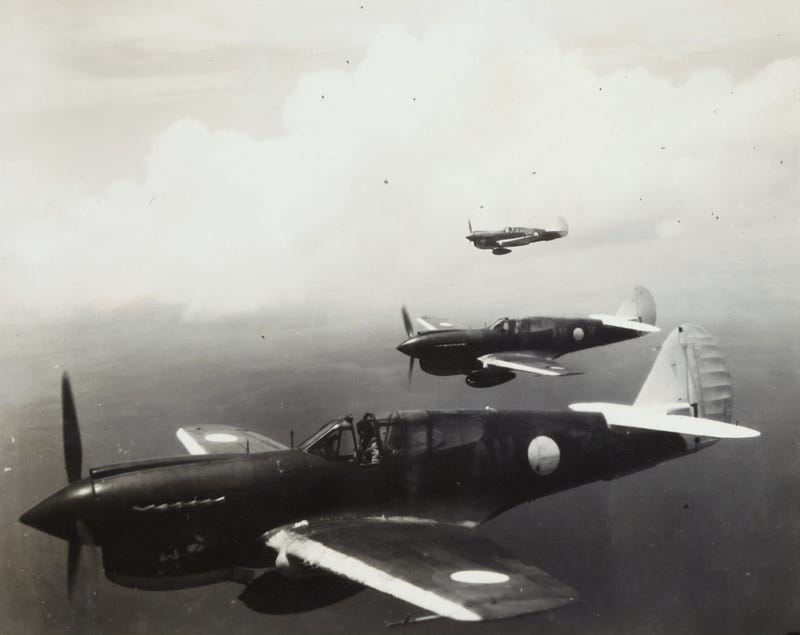
For the navy, the transition took a long while from “Battleships-dominated” theory to “Aircraft carrier centered” warfare.

When the Americans initially tried to hit ships in the open sea with air attack in 1942, the efficiency were extremely low and all sorts of incredible mistakes were made. There were countless descriptions in the book:

  • Spy planes mis-communicated the critical intel, leading the whole air squadron to attack less significant targets while leaving the fleet vulnerable
  • Attack squadrons could not find enemy fleet somehow, even though the correct coordinates were communicated to them
  • Radio did not work, so the commander dare not give orders to the squadrons in the air, worrying that this would confuse pilots to death
  • Planes could not find their carriers, or even tried to land on enemy carriers
  • Tons of bombs dropped without hitting a single target
  • Pilots risked their lives to release torpedoes that did not work
  • US air squadrons could not even form formation in the air and execute coordinated attacks
  • … …

But only one year later, in 1943/1944, similar descriptions started to disappear and were replaced with only simple terms of how many ships were sunk and how many planes were lost.

No more drama in the attack. Luck was no longer a factor. Ships expected to be hit when they saw enemy planes…

This showed that the US fleet had increased their air attack capabilities in the open sea. 

And only then it could be said that aircraft carriers had become a dominating factor in the naval warfare.

Of course, the learning journey came with its own costs — ships that were sunk, planes that were destroyed, crews that were killed…

But that was the only way.

On the other hand, the British, as the traditional naval superpower of the world, was completed missing in this journey.

So they dominated nothing after the war and were never again a superpower. 

Photo by Rafael Garcin on Unsplash

As long as we stay in the game and keep growing, we will not be obsolete.

Otherwise, just look at the British today and think about “The No More empire on which the sun never sets”.


Till next time!

Tuesday, December 21, 2021

Wrong Commitment Costs

Photo by NeONBRAND on Unsplash

Dear Readers,

Thank you for coming here!


I got myself into a wrong commitment and I am not happy.

It is wrong because

  1. The whole thing was not right and I did not make that clear.
  2. My intention was not pure
  3. The other party was not helping me to help her
  4. I was not helping enough by giving feedback
  5. My other commitment was unexpected
Photo by Susan Q Yin on Unsplash

1.The whole thing was not right and I did not make that clear

A friend asked for the favor to build an automation model in excel using VBA.

She asked me because I had done it before. That was my star project more than 10 years back.

I spent so much time building that model to make it robust and widely applicable.

What she asked was really just the basic features that could easily be taken care of.

The problem was I no longer had that model. I did not take it with me when I left the company…

So save your work always guys.

So I had to build a new one to help her.

Another problem was that once the automation model was built and shared, people would always ask for new features and VBA is not a particularly robust tool.

This would be a problem for her if she does not know enough about the coding and the model.

I felt it was probably a wrong idea when she asked.

But I did not really get this out to her. 

2.My intention was not pure

We were quite close as colleagues and she did help me before.

I wanted to return the favor and maybe secretly wanted her gratitude as well.

Photo by Toa Heftiba on Unsplash

3.The other party was not helping me to help her

Hands down, I do not want her in my team.

She just asked and waited, without showing any initiative.

She did not really want to acknowledge that she needed help even though she asked for it.

So when I asked for her raw file so that I could build the model that she could straightaway use, she refused and insisted to adjust the model herself.

She did not get back to me until last minute after I sent her the model. Sometimes, it took her months to get back to me. And when she came back with problems, I pretty much forgot about the code and had to spend time reading through again.

When we got on virtual discussions, she came unprepared and most time was spent on things she should have prepared beforehand. I had to constantly remind her to focus on the problems too.

She did not spend the time to populate the input table. So I could only test with a sample. New problems and requirements kept coming out when she added more sample in.

….

I did not mind helping her. But the whole process could have been so much more efficient.

4.I was not helping enough by giving feedback

I noticed her behavior above and was annoyed by it.

But I did not give her the feedback. 

She was not going to build a new career and achieve some new heights or anything like that. She just needed to get by.

But I do think I could have helped her more by e.g. pushing her to respond earlier and checking her preparation…

Photo by AJ Jean on Unsplash

5.My other commitment was unexpected

She asked in Aug and I was working 1–2 hour a day. I thought we could fix everything in a week. So no big deal. 

It has been 4 months…

With the extra commitment and recent changes, I have been working 14 hours a day since Oct.

Now her behavior just seems more annoying…

And it has not ended. 

She has problems all the time because she changes code but cannot even do the most basic debugging…

Photo by AbsolutVision on Unsplash

In the end

A few leanings from this wrong commitment:

  1. Always save our good work
  2. Avoid helping people who do not show commitment and initiatives to help us help them
  3. Put a stop as early as possible if things do not go well. The more we invest, the harder for us to pull out.
  4. Honest feedback is a hard thing to do but sometimes, there is no way around it
  5. Value our time
  6. Do not over-promise as we do not know where our time could be requested tomorrow
  7. Try to stay pure in intentions. That usually shows us the best course of action.


Till next time!