Showing posts with label habit. Show all posts

Tuesday, January 31, 2023

It hard to balance

Photo by David Clode on Unsplash

Dear Readers,

Thank you for coming here! 


Everyone wants to work on things that can generate results directly, instead of backend which seems insignificant.

And everyone wants to go after the big fish, instead of the small ones.

This is especially true when you go up.

Photo by Sven Brandsma on Unsplash

But more often than not, results are not entirely up to us. There are always factors we cannot control.

As a result, sometimes, the only thing we can do is the backend staff or the small thing.

In that case, doing the small things well is the only right thing to do.

It is hard because we have to convince or force ourselves to endure the boredom and suffer from the feelings that no progress has been made, despite our hard work.
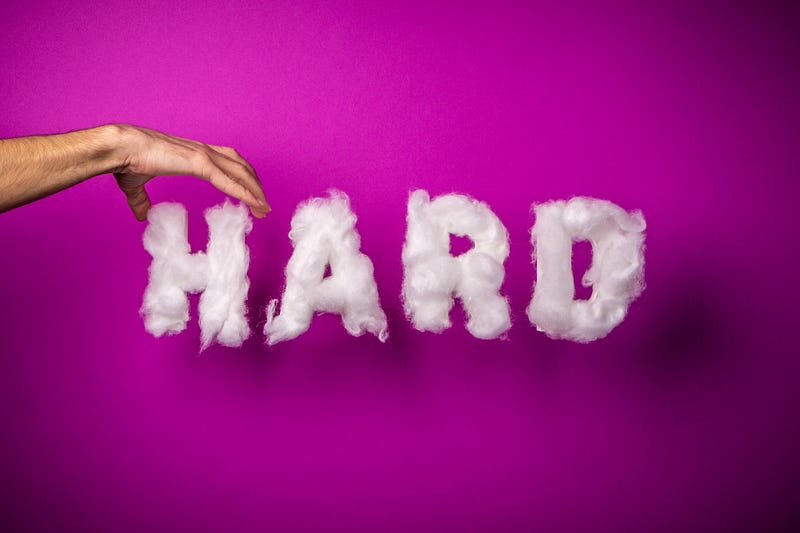
Photo by stefan moertl on Unsplash

And then it comes the harder part — to sustain.

Are we sure these are the only things we could do now?

How can we be sure that we are not using the small things as excuses to avoid facing the bigger problems?

And sometimes, the questions are justified because we are using them as excuses.

So we might constantly swing between the two ends. The consequence is usually the worst — we accomplish nothing in the end.

Photo by Johann Siemens on Unsplash

It is hard to balance.

But below can carry us a long way.

  • Have a strong sense of security towards ourselves
  • Maintain a cadence and habit that are satisfactory to ourselves
  • Do not be a slave of laziness — do what you have planned

To us all!

Thursday, March 3, 2022

Slow is Fast — never just do something when asked

Photo by 愚木混株 cdd20 on Unsplash

Dear Readers,

Thank you for coming here!


Past week has been stressful for me at work.

Not only because of the work itself, but also because of the additional hours resulted from my failure to understand before actions.

One typical example:

  • One partner asked me to do something and I thought it would be a quick change so I just did it to get it over with. I did not care about that change and did not bother to find out why.
  • Then another partner asked me to undo the change. When he asked why I did the change in the first place, I looked like an idiot who could only respond that the other partner asked me to do it.
  • Most of the time, I had to undo the change and needed to explain to the other partner

Another typical example:

  • I was asked to do something and I thought that was a lot of work with not enough benefits.
  • I became very reluctant to do it and I showed it. And I pushed back using that.
  • The partner explained and even argued why it had to be done. 
  • I just would not listen and just could not get myself out of the thinking that this would be a lot of work and now I would need to protect myself and push back.
  • Most of the time, I had to do what I was asked anyway after spending the time “arguing” and sometimes irritating the partners.

This resulted in iterations of work, which are never a good thing, especially under high-pressure situation with tight deadline.

And I looked like an idiot, which are never a good thing either.

And I gave the negative impression that I would avoid work, put myself before the client and team, and therefore, do not have enough commitment to client, project and team. Definitely not a good thing.

And I do not learn why the partners would ask for or reject the change, which is a good reflection of the way or work and also his own experiences. Absolutely a bad thing.

Photo by Mathieu Stern on Unsplash

When I reflected, the key element missing in the process was my own judgement based on the right rationale.

Without my own judgement, I could not prove or disprove the merit of the change, to justify or defend the action to either make or reject the change.

Without my own judgement based on the right rationale, I appeared selfish and could not get my point through.

Photo by Tolga Ulkan on Unsplash

My lack of judgement based on right rationale could be caused by a few underlying reasons:

  • My lack of commitment — I did not care enough about the client, team and project
  • My failure to understand the reason and significance of the change — I did not know the reasons why partners asked to do something or not do something. Neither did I see the implications of the change to the client and project.
  • My under-estimate of the value of my ideas — These guys have their skin in the game for many years. Why would my ideas or judgement even matter?
  • My laziness to just complete something for the sake of completing it — I am more concerned about ticking the box, rather than focusing on the impact the box would bring. This is actually laziness.
  • My wrong inclination to accept or push back a change request based on the amount of work I perceived — if I thought it was easy to do, I will just accept the request and make the changes. Why wasting the time to discuss? If I perceived more work was required, I would push back. This was wrong. It should only be based on merit of the change first and only then discuss implementation.
  • My wrong perception of work needed — sometimes, the change was easier than I anticipated and other times, it was harder and took longer time.
  • My lack of enjoyment and motivation in the work — I did not really enjoy the work and did not really appreciate the meaning of the work

None of these is good. I need to work on all of them.

If not, why would I step out of my comfort zone and take this challenge anyway?

Photo by Hanna Morris on Unsplash

Going forward, when I am asked to do something, I will follow below 5-step process until it becomes a habit:

Ask—Discuss — Judge — Decide — Act

1.Ask

I will force myself to ask why and understand the reason behind, so that

  • I learn
  • I do not look like an idiot when asked
  • I do not feel frustrated when doing the work
  • I increase my investment in the project and become more committed

2.Discuss

Voice out my reasons and concerns and actively discuss with an open mind on why or why not the proposed change might help the client and project.

  • I learn even more
  • I practice my discussion skills
  • I understand what I am doing and why I am doing it.

3.Judge

This is purely my judgement after discussion. It could be:

  • This is the right thing to do
  • This is just his preference
  • This is the wrong thing to do

4.Decide

My decision. It could be:

  • Agree and do it
  • Disagree but do it, to be a team player
  • Disagree and keep pushing back on merit of the request; need to immediately go back to discussion

5.Act

Act accordingly, knowing very clearly why I am acting the way I am.

Breaking an old habit is hard. But it can be done if we have the commitment and right way of dealing with it.

To us all!