Flexibility: One of the biggest advantages of the gig economy is the flexibility it offers. Freelancers can choose when and where they work, and have the ability to set their own schedules.
Variety of Work: The gig economy offers a wide variety of work opportunities. Freelancers can work on a range of projects, and have the ability to explore different areas of interest.
Higher Earning Potential: Freelancers can often earn more than traditional employees, since they have the ability to set their own rates and take on more work.
Inconsistent Income: One of the biggest challenges of the gig economy is the inconsistency of income. Freelancers may have months with high earnings, followed by months with little to no work.
No Benefits: Freelancers are responsible for their own benefits, such as health insurance and retirement savings. This can be costly and requires careful planning.
Self-Marketing: Freelancers need to market themselves to find work, which can be time-consuming and challenging for those without marketing skills.
Diversify Your Income: To avoid relying on one client or source of income, freelancers should diversify their income streams. This can include working for multiple clients, offering different types of services, and exploring different platforms.
Save for Taxes: Business expenses are tax exempt. The least thing you can do is declare one of your rooms as your home office. Other things include stationary, transportation, business meals etc.
Build a Network: Networking is crucial for freelancers, as it can lead to new work opportunities and referrals. Joining industry groups, attending conferences and events, and building relationships with other freelancers can help you grow your network.
Invest in Yourself: To stay competitive in the gig economy, freelancers should invest in their own professional development. This can include taking courses, attending workshops, and obtaining certifications.
Set Boundaries: With the flexibility of the gig economy comes the risk of burnout. It’s important to set boundaries, such as limiting work hours and taking breaks, to avoid overworking and maintain a healthy work-life balance.
In conclusion, the gig economy offers new opportunities for freelancers and self-employed professionals, but it also comes with its own set of challenges.
By diversifying income, saving for taxes, building a network, investing in professional development, and setting boundaries, freelancers can navigate the gig economy successfully and achieve their career goals.
“One step at a time” might seem slow and boring, but it is probably the best strategy for life.
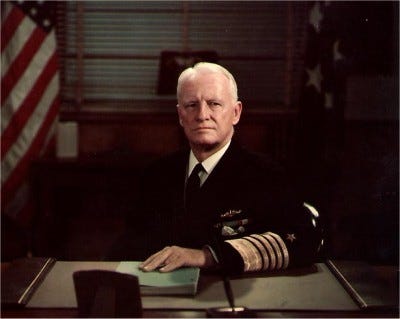
A great example is Chester W. Nimitz, the famous admiral who led the US Pacific fleet from the defeat in Pearl Harbor to the ultimate victory in World War 2.
He had the opportunities to “fly” to another path of life and to higher positions, but he said “No”:
He said “No” to money. In 1915, Captain Nimitz lived in a small apartment with his wife and two little kids, earning a monthly salary of USD 288. He was offered USD 25k per year by a private company, who was willing to up the stake if Nimitz asked. Nimitz said No because he knew he wanted to stay in the Navy.
He said “No” to promotion. Early 1941, Nimitz was offered to command the US Pacific fleet. That would promote him to Admiral, by-passing 50+ of his “superiors” in rank. He said No because he knew that would upset them and ultimately affect his ability to perform the job.
I have to say these are very hard to resist, at least for me.
But if Nimitz had accepted the first opportunity, he might have lived as a rich man. But he would have never got the opportunity to command the Pacific fleet.
If he had accepted the second opportunity, Pearl Harbor could have happened during his tenure. And he would have lost the opportunity to command the fleet for the battles to come.
By rejecting the opportunities and just focusing on doing his job, Nimitz is remembered in history.
I have to say that we had a good start because we had many things entrepreneurs would cry for.
1.We had money and support
Even before we decided to kick start the whole thing, we had an investor.
He is willing to invest quite a handsome sum that could last us for 2–3 years at least.
And he owns his own company and he promised support, e.g. on marketing material, client network, licensing products etc
Of course, he would require shares and we discussed and reached a mutually agreed arrangement.
2.We had time
Like any start up, a lot of time and work was required.
Luckily, we both could spare the needed time, without affecting our life and work.
We had to work till 2 or 3 in the morning for a few times and had to burn a few weekends, but mostly, our work allowed enough room for us to do the needful without affecting our time with family.
And we can continue this kind of commitment at least until we have something serious ongoing and then we could explore hiring someone or even getting full time.
3.We had connections
We both knew people who would need our solutions.
And we both knew people who can provide some of the solutions.
We could easily act as middleman in the beginning before we established our own solutions capabilities.
…However, it was what we lacked that led to the end
We had many good things to start with.
But two things we lacked, namely “Want” and “Need”, caused lack of commitment from both of us, which eventually led us to ending the adventure.
“Want” and “Need” is usually used to guide us on spending decisions to reduce expenses and save money.
However, I find them perfectly fitting here.
They are really good things, without which motivation and resilience becomes abstract.
1.We lacked the “Want” — passion
We both believe that we can manage bigger and better things.
We both believe that our jobs do not provide enough room for our full potential.
We also both believe that our solutions are capable of improving the efficiencies of the industry.
However, we do not have to have it.
We do not lose sleep if we do not have it.
So I would say the passion is not present.
2.We lacked the “Need” — pressure
We both have families and some net-worth.
He always has a job and I have a job now too.
While we do welcome the extra money and impact that this adventure could potential bring us, we do not really have the need.
We do not need the revenue of the start-up to feed our families or pay the bills.
Therefore, neither of us was willing to quite our job and became full-time on this.
Therefore, things moved slowly sometimes.
Therefore, we became less determined upon frustrations.
Therefore, when it became clear that he would need to go through a lot of applications to secure the approval to be the direct of the company, we kind of decided to stop there…
Before we come to the end, I do want to be fair to ourselves too.
The whole situation is still a long shot.
The relations with the investor is more complicated than what I could describe here.
The revenue-generating activities are still a bit unsecured. We had some pipelines and we had quite a few interactions and we faced difficulties, such as lack of willingness to spend despite the clear demand etc.
This commitment did pose some potential roadblocks on other aspects of our career and lives, such as when we evaluated whether to take another offer etc.
So at least, the situation is not exactly that we just gave up a start-up with good perspectives, due to laziness or whatever, which you might come to feel from what I wrote above.
1.So really, it is not the lack of opportunities, but rather how we choose to do with them
It is easy for everyone to complain lack of opportunities — I can at least do as well, most likely better, if I had his/her background, education, beauty, platform or even luck.
However, as we all slowly realize, everyone has their own opportunities.
Everyone also has their own good and bad luck.
Everyone gets to enjoy their own periods of smooth growth, and everyone inevitably experiences their own frustrations and set-backs.
But it is really what we choose to do that makes a difference.
Are you willing and brave enough to take the risks and put in the hard work to go for it?
And many times, the former could be so much harder than the latter.
At least, congratulations to myself! I just lost the right to complain that “I did not have the opportunities”.
2.Start-Up is hard
It is a hard path.
Even with so many things to start with, this was a still a very hard journey for us.
We were doing it in our spare time.
We can only imagine the hardship and stress for anyone who is full time on this and who is dependent on the success of it.
We logically assessed that we could have a good chance of succeeding comfortably.
We were completely wrong.
3.“Want” or “Need” leads the way
It is hard to have something extraordinary unless we have to have it!
We have to have it either because we have enough passion or we have enough need.
These are the good things.
In a way, how much one can achieve is determined by how much “Want” or “Need” he has.
For someone who has nothing, it is clear that he has to go out and fight.
For someone who already has something, the choices become less clear — he will need to evaluate the options: settle with what he has or go out there to fight for more with 1)more hard work he has to put in and 2) the risk of losing what he has now.
Sooner or later, what he has will reach a threshold where settling becomes the clear choice.
And the “Want” or “Need” determines the threshold for everyone.
4.Good buddy is invaluable
It is going to be harder for someone to accomplish something alone.
Therefore, a buddy who you trust and trusts you, share the same belief and is on similar level of “Want” or “Need” is invaluable.
There is a high chance you can work together and increase the odds.
If you recognize one, do not let him go. At least, stay in tough and watch out for potential opportunities.