Over the weekend, I had some time to catch up on the VR news.
Nov was supposed to be biggest month ever for VR, at least on the consumer hardware side.
But to me, it turned out to be a big disappointment.
With 4 launch events in like two weeks, you would think there would be some exciting advancement, especially with the Oculus leak after the announcement of HTC Vive Flow.
In a way, there was, but definitely not the way I expected.
Lets see how they disappointed.
HTC Vive Flow has amazing form factor, but what it can do in gaming is so limited. This is ok for me as I never had high expectations to begin with.
Varjo Aero is so close to the best of what we can expect now. But it costs a fortune. I am not ready to spend 4000 dollars on VR just yet.
Pimax is really exciting, with all the specs built in and the affordable price. Guess what, we have to wait until the same time next year to get our hands on them…
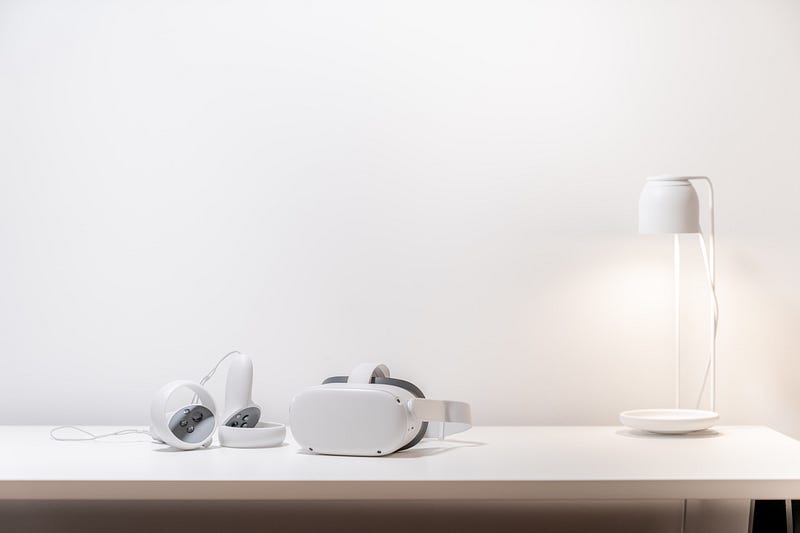
Oculus (or should I call it Meta) is really disappointing though. The stuff they released after the launch of HTC Vive Flow and all the speculation afterwards got me so excited. I was sure we were going to get the updated Quest with similar form factor to HTC Vive Flow. I was ready to pay double the price of Quest 2, even with the same specs as Quest 2. But No….Apparently that was too much to ask for.
It is so freaking disappointing.
Why the hell does the tech has to develop so slowly for mainstream consumers? It has been more than 10 years since the initial hype.
I was thinking about whether to buy it and I heard about the planned launches. So I waited, only to be disappointed.
GTA and some other popular titles are coming to Quest 2 platform, so I guess Quest 2 will still be relevant for some time.
From my research, the biggest concern for the purchase is that I wear glasses. And it does not seem to be very friendly to people who have to wear glasses.
The rest of the concerns, like having to purchase better head strap, facial foam etc, I am ok with.
I am ready to invest 500–600SGD for the experience.
To avoid unnecessary mood swings and the mostly negative impact associated with them, we can find a more stable/constant anchor for our mood, instead of being reactive to what happens around us.
Three factors to consider while looking for the anchor:
It connects to a structure that will help us achieve our end goals
It is not new that many people are subject to abusive workplaces.
I am no exception.
1.The “What”
The typical pattern for me is:
First, I want to be a very good employee. So I take everything on myself, even though I feel uncomfortable.
If the boss is overly and unnecessarily picky on me (actually, many times it is because the boss himself gets picked on by his boss and tends to over-prepare and dwell on the details), I will force myself to think I am not good enough and need to improve my work.
If the boss has a work style that interrupts my life (e.g. calls after 9pm almost everyday and many times for completely worthless matters), I will try my best to adapt, on the expense of the wellbeing of me and even my family.
I start to question myself why I have to take all these senseless shit, even though I am already the hardest working one in the team and contribute the most to the boss’s agenda.
I start to fall into self-deception that the boss knows my commitment and all the support I have put in for him. He is going to take care of me on pay rises and promotions.
I might try to push back a bit. But more often that not, I am not firm or skillful enough and the result is things will just continue and the boss is even more convinced that he can override me.
The boss would think I am asking for too much and do not know to be grateful.
I would think the boss does not know to be grateful and does not recognize how much a help I am and how important I am to him (usually I overestimate myself).
So with this type of mindset and totally different expectations, no meaningful conversation can be had.
And both side continues to lose patience towards the other.
Usually, it ends with my resignation and a burnt bridge.
I still struggle why I keep falling into the struggle of “over-stepping” and why I still feel uncomfortable putting a stop to it even after I realize it is necessary after so many painful lessons.
A logic chain was briefly mentioned in one of the chats with friends.
And I think that might just be it.
So it all starts with the “Source of feelings”.
My “Source of feelings” is how the boss treats me.
I feel good when the boss is good to me.
I feel bad when he over-steps and make me annoyed, especially with no rewards at the end of the day.
So to me, the key to feeling good is how to make the boss be good to me and not over-step, better still with rewards.
The logical answer is that I need to be obedient and make his problems mine.
And nothing encourages the boss more to over-step.
While over-stepping, the boss might really believe I am ok with it or even enjoy it.
And I feel worse and try even harder…
Until one day, I have had enough and just need to break the chain.
Unfortunately, after being so long in the chain, the only way to break it is with a “BOOM!”.
One of the managers of the client is very knowledgeable and supportive to us, which is really helpful.
I work closely with him.
Following up on a conversation we had, I sent him an email around noon Friday.
He replied around 9pm on Friday.
I saw his reply on Saturday morning.
It was a time-critical task. So I started to reply his email right after I saw it.
I wanted to be as clear as possible and as considerate as possible, so I spent almost half an hour writing a reply.
While checking whether I had everything covered, I noticed that he added his boss in the cc list of the email.
So the thoughts came to me: was he trying to show how hard working he was to his boss? Would it be good to show that I was even more hard working than him?
Frist, if the manager was trying to show his hard working to his boss, my reply could hinder his effectiveness.
That could in turn affect his support level to the engagement, which would surely be a negative thing.
Second, retrospectively, I feel my underlying reasons for still sending the reply then were partly self-serving.
I recalled below reasons for sending the reply on Saturday morning:
It is a time-critical task. Sending the reply out as early as possible could draw an earlier reply and thus accelerate the progress— Accepted
It shows our commitment to the client — Accepted
I have already written the reply. Sending it out will close this task for now on my end — Self-serving
I want to show how hard working I am to my bosses. A few of the leadership team were in the email loop all along — Self-Serving
Maybe the manager was not trying to show off his hard working or even if he was, my reply wont cause his support level to fall — Pure assumptions
So I decided maybe I was overthinking about this. I should just focus on the task itself and nothing else.
So I sent the reply.
While I do not know whether and how much the reply will affect the manager yet, the thought that 40% of the reasons for that “Send Now” decision was self-serving bothers me.
Maybe it was the right decision.
But even then, the end does not necessarily justify the means.
I know many examples where self-serving intent, even a minor one, ruins plans, progresses, projects, career, or even nations.
But I think it is important in the decision process that we do not lose sight of the end goal.
The end goal here is successful delivery of valuable engagement to the client.
Then the manager’s support is more important than my self-serving intent: showing off my hard working and closing the task on my end.
While it is always good to show clients how committed we are to them, I do not think the client doubts our commitment to the engagement at that point.
Then it becomes a trade-off between the possibility of getting an early reply and the possibility of an “angry” manager reducing his support towards the engagement.
We could argue the possibility and the impact of each choice.
But I think at this point, whatever decision we make is acceptable and justified, because that is our best decision for the end goal (successful delivery of valuable engagement to the client) at this point based on best information and judgement available.
That does not guarantee the actual best decision though, but it is the best decision we could have.
Also, creative options might emerge also.
For example, I could reply just to him, taking away the concern of defeating his possible plan and at the same time retaining the possibility of an early reply.
But again, no guarantee this is the actual best decision either, as the other stakeholders might not be as informed as they should be and cause hiccups somewhere else.