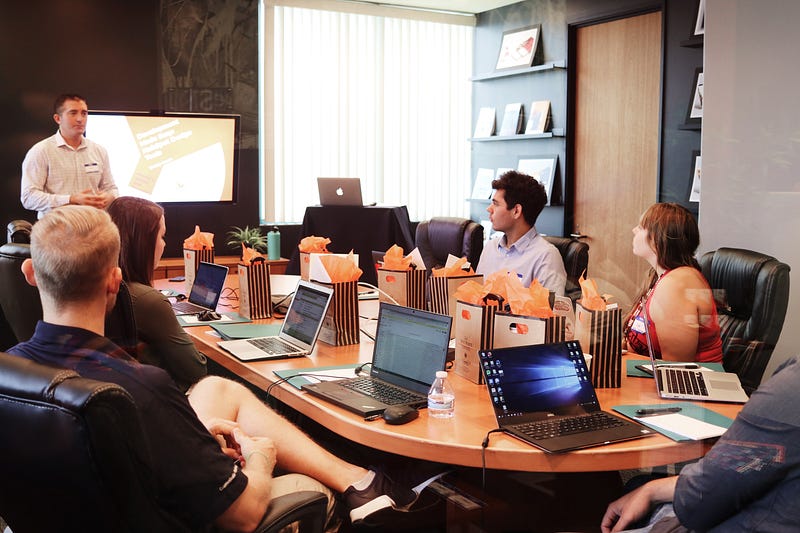
I had a very embarrassing Steerco this week, with a lot of learnings.
1.What happened?
I used a different source of data for an analysis, rather than the invoice data which was supposed to be the source data for everything.
That resulted in a baseline 6 time higher.
The client captured that in the SteerCo, and no proper explanation came through and it turned into a very embarrassing moment.
The cost was high.
If I had just used the invoice data, I would have saved time in doing the analysis, saved the embarrassment as well as the time I had to put in after the SteerCo to make amends.
The time alone I could have saved would be easily one day of work.
Let along the impact of this embarrassing moment on our credibility and other aspects on the higher lever, such as the possibility of the next phase commitment, as well as the time leadership had to put in to manage damage.
I was so vested in the task that I wanted to get every possible thing that can make it better, so that people would keep seeing the good work I had been doing.
So instead of the using the invoice data as baseline, as every one else was using and as I was using for any other task, I picked another source, which required much more work but did not really have any strong rationale to be a better source than the invoice data, apart from that it would make the analysis look prettier.
And I did not catch the hidden duplication in the data and thus the baseline was 6 times higher.
And then I was hit by the embarrassing moment and had to deal with the consequence.
This is a perfect example why maintaining professionalism all the time is so critical, especially in time-critical tasks.
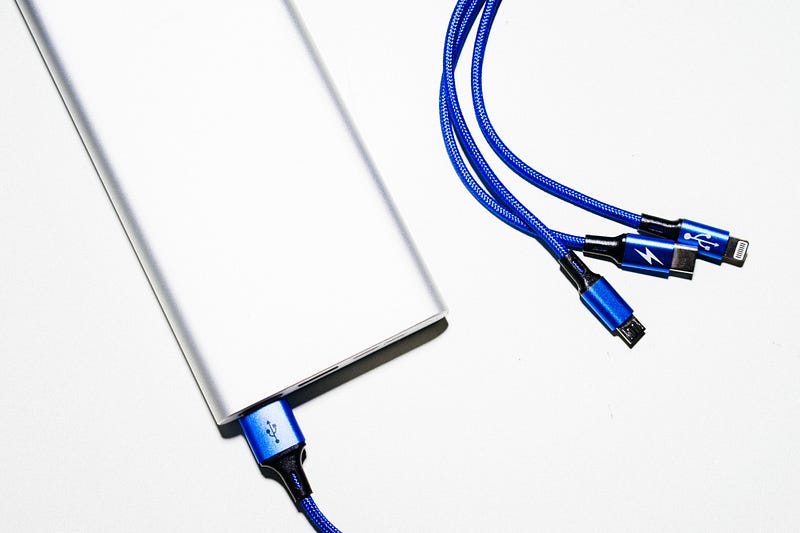
If the battery tech could evolve enough to allow one full-day charge for two phones in one single power bank, we probably do not need power banks any more.
Because with battery tech that powerful, our phone battery alone would be able to satisfy our daily needs.
I never expected this post to be so long. And it took at least 5 times the time I originally planned. Checking the facts and recalling the thinking then was the time-consuming part.
But it was worth it. I took this opportunity to have a careful review of the whole journey and hopefully I could offer something of value to you as well.
And I found out that certain things were just hidden away from my sight, but they were never lost.
Three things to take note:
1. I did a more throughout assessment and found out that the “lost” returns was actually over 300K, instead of the 200K I derived from the ball park estimate
2. Certain things can be hidden or buried. But they will just jump out at the right occasion and they cannot be ignored. I realize some of the content is not very much related to the topic. They should be easy to spot. Feel free to skip them.
3. I had to stop half way last week due to lack of time and decided to split the post into two or even three. I am able to complete it now and have made some revisions to the first part too. So I have posted the completed version here for easy read.
I really hope this read can provide you with some take-away. That would exceed my expectations I have for this post!
After reading a few books, discussion forums and discussing with the friends in the industry, I gathered a few investment strategies.
After evaluating my interest, estimating the time I can invest in the area and recalling my inability to balance a balance sheet in university, I decided to take up a simple and proven one:
Use CPF as bond component
Invest all my other investable asset in stocks with 90–10 split into world index and SG index
Adopt the DCA method with monthly capital injection
Seeing the deviation from the strategy, with an empty war chest and SG index continuing to drop, I struggled between continuing to invest in SG index and switching to invest in world index, with my only cash flow — what’s left over from my salary after expenses.
I was lucky to take a rational look at that time.
The event that Creative decided to go public in HK made me realize that SG market was small and lacked the upside potential.
So I switched to world index.
That was when my return started to recover.
I thought of selling the SG index to restore my portfolio split, but I was a firm “buy and hold” believer at that time and the fee with the banks was high (there were less choices for brokers then).
For the next one year or so, I stayed the course to invest in world index on a monthly basis.
And the amount was quite consistent since my salary and family expenses were quite consistent.
So I was actually DCA-ing. This is probably the only period I really practiced DCA.
Before I deviated again from the strategy, my portfolio split between World and SG Index was only close to 50–50, still far away from the split set by the strategy.
The returns were good.
During the same period, I also took my money in China out of P2P lending and started to invest in China index.
I went from a situation where I had 2 well-paid offers to pick from to a totally different one where I was jobless. It happened two weeks before my onboarding to the new job so it was not even possible for me to keep my current job. The financial loss was much heavier than what was discussed here.
I was suddenly in a totally different state, where things I needed to worry about changed almost entirely.
Before the incident, I was worried about how to get more returns through investment and retirement planning.
After the incident, I had to worry about how to make sure we had enough to cover our expenses and how to regain that cash flow without taking a job I hate or a significant pay cut.
What worried us most was the uncertainty. I did not know when I could get another job and restore the stable cash flow and the prospects.
At that time, I felt lucky that my war chest was full.
The deep and narrow “V” surprised almost everyone.
Even some of the investment guru in big investment institutions were asking their client to sell and not to buy, I later found out.
Very few expected the market to recover so quickly.
However, COVID situation continued to worsen.
China closed borders which meant I could not onboard my new job.
I will continue to freelance. I still expected to get paid then, but knew that the pay would come much later.
So we again had to evaluate our situation.
This time around, we knew we were dealing with something much worse than what we expected. Instead of 2–3 months of no income, we could be dealing with a year or even longer.
So when the market recovered and was about 5% higher than the previous high, I decided to clear my positions in World Index and China Index, to pocket the gains.
I was really scared of a “Double Dip”.
It was not about returns any more. It was about more basic needs for my family.
I was very very busy with work leading a very challenging team on a very challenging engagement for a very challenging client, suffering from back pain due to sitting long hours under high pressure. So I had no time to look at the markets.
At the same time, I was very very pessimistic and even frightened.
You might be wondering why I cleared my positions for World Index and China Index, instead of the SG Index.
That way, I could have harnessed the 30% gain for World Index and China Index in 2020, and avoided the stagnant SG Index.
There were a few reasons:
The most important one was probably the fact that I was still losing money in SG Index at that time. This cognitive bias made me try to avoid realizing the loss.
I did not believe the SG Index could experience any significant further drop and therefore the risk of “Double Dip” was low
SG Index paid out (still do now) dividend in SGD, so it would directly help our cashflow, which was of ultimate importance.
This deviation made me lose the opportunity of another 30% gain on basically all my capital invested in World Index and China Index, which is substantial.
After I stepped away by clearing my positions in World Index and China Index, my situation continued.
I continued to freelance with the expectation for the pay diminishing along the way.
And I rejected the opportunity to re-join my previous company in Jul.
So my situation continued and all the concerns were still present.
So I kept away.
I did not make any capital injection into the market.
I was holding quite a bit of cash just in case.
Looking back now, that was too much emergency funds, enough to cover our expenses for at least 3–4 years.
I guess I was still frightened by the possibility that I would not be able to provide for my family.
My family should not suffer because of my mistakes or inability.
Also, I was quite worried about our new flat.
My wife’s salary would not get us enough loans.
So the possibility of us losing the flat and all the down payment and expenses was real.
The situation was bad.
And one thing became clear when I thought back: my approach was contradicting!
On one hand, I was really conservative with money we already had to prepare for “rainy days” — I almost laughed when I wrote this down. We were already in the “rain”.
On the other hand, I rejected the opportunity to draw a stable salary on a stable job, which was more than enough to make all my worries above go way.
I stubbornly believed that the China opportunity provided more potential. And there was “trust” and “cannot let them down” with my mentor involved.
However, deep down, I guess I was still angry and I refused to let the incident define my life in any way.
So the fact that I did what I did in those situation without realizing it was a sign that I valued my pride and career potential over more money after being able to provide enough for my family.
Under all these pressure, especially the risk of losing our flat, when the VP of my previous company reached out again, I finally “gave in”.
I thought I “gave in” to short term gain at the cost of long term gain, because we were always talking about how much the increment would be.
It turned out to be 15% pay reduction. And the process took so much longer than what the VP promised.
And I had to reach out to the HR to get any update.
I felt humiliated.
I thought of just walking away and leaving all these behind.
My wife was always supportive. So she had no problem if I just walked away.
But I was out of options then.
I told my mentor my intention to accept the offer even before I said “Yes” to the VP. Even I could go back to the old offer, it would not help our cash flow any time soon.
And finding another job soon would be hard.
So I took it.
Among all the bad feelings, I also felt relieved when I signed the offer.
I knew I would get some room to breath and re-collect myself. I could not do this while in the state of scarcity I had been for the past 1 year.
This was what I got for “being a coward”.
I knew I had to live with my choice and the constant and painful reminders that came with it.
To do that, I knew I had to make peace with myself and with the situations.
I think I managed it by ignoring the reminders as much as possible and distracting myself on other things.
So we all can get pretty good at self-deceiving when it comes to that.
We got our new flat without any problem. And after a few months of stable income and re-establishing some routines, I was ready to come back.
When we reviewed our financial situation, I was shocked by the returns my wife managed by investing the small amount of capital we had in spare, mainly the onshore RMB we saved from wedding gifts and my salary when I was working in China.
She mentioned to me a few times and I had the impression that she was getting good returns.
However, returns that good still surprised me.
And the logic seemed simple.
So I decided to re-enter the market with the new strategy.
At first, we were lucky. The returns quickly overwhelmed me.
So after we have emptied our war chest, I decided to finally let go of our SG Index, which was still in the red after a few years.
Shortly after, the “profiting taking” happened and my portfolio slipped into the Red, while SG Index had a pretty good run after the Chinese New Year.
So my portfolio has been in the red since then.
From time to time, I wish I had pocketed the gains of over 60K. But for the most part, I was not affected and I did not reduce any positions.
The most effective strategy is usually simple. Staying to it is the hard part.
From my experience, it definitely holds for investing. In the course of 3 years, the simple strategy could have earned me 300K SGD if I had stuck to it.
One big enemy is free time that we do not know how to spend.
Maybe the unintended benefits of staying busy with work or life is that we are forced to stick to the simple strategy.
Yesterday afternoon, when I saw that the stock was halted in the pre-market, I just assumed that the trading will not resume until the restructuring was completed.
Feeling not happy and still a bit nervous, I took my mind off by doing something else.
And then, all of a sudden, I received a notification that my positions were sold at 60% loss.
Until then, I realized:
The trading was still ongoing. It was only halted in the pre-market
I forgot about my “Stop-Loss” order, which I always do in this kind of trading and which is supposed to be a good habit.
And pain and remorse and anger about myself filled my mind, as I watched the stock regaining its ground rapidly.
When I woke up this morning, I saw the peak of the price yesterday was almost at my “Stop-Loss” price, which is about 10% loss.
Get to the most basic aspect. Growth potential should only be based on the strong foundation that the company wont be bankrupt.
Know the facts. Be really clear on different arrangements. If I knew the trading will resume, I will probably remember to cancel my “Stop-Loss” order, especially when I was ready to wait.
Never hold heavy positions in speculation. I wished I bought more on that 44% gain and I was certainly relieved that I did not buy that much for this 60% loss.
Being able to communicate the picture clearly and make your audience understand is more important and a lot harder to do.
I always knew it would be hard, because people are very likely on different frequencies, due to background, experiences, education etc etc.
However, I never expected it to be so hard.
Previously, even as a consultant when I had to communicate with people I do not know at all, I could typically manage it.
I could adapt to their styles and habits fairly quickly. After all, it was my job to make them understand and cooperate.
However, things are different now.
My new boss posted a huge challenge for me.
I just could not seem to reach the common understanding with him. Even when I thought we did, we did not, because he expected totally different things from what I delivered next time we met.
This added a lot of frustrations and pressure.
After a while, I think I kind of figured out the reason — we were talking about different “pictures”.
He was always talking about the long-term picture and I was always trying to explain and align with him the intermediate picture which was realistic and executable given our resources.
He got frustrated because he simply wanted his picture.
I was frustrated because I told him I understood his long term picture and now I would like to discuss with him what we can do to achieve it in a realistic way. Or at least, we should agree on the expectations before our next meeting.
Once I realized it, the communication has become much better.
I will simply ask him “what do you think we should do now before we meet next week?” and if he has no clue, I give him my suggestions.
This seemed obvious and unnecessary to me as well at first. But that question clearly told him that we now discuss what we do today or this week.
That establishes a common platform.
It is ok if he does not have a clue or he does not care. I will simply give my suggestions.
Sometimes, the solution is so simple.
Simple solutions typically require clear and deep understanding which is not simple to do though.
Based on my experience, I offer four pieces of suggestions.
1.Show the pictures
This is the most intuitive thing to do.
We want to explain and make people understand our pictures, so just show them.
This will be much more effective than just explaining verbally.
If we are building a PowerPoint deck, show the dummy deck.
If we are doing an analysis, show the scenarios — what are the possible outcomes and each possibility will lead to what conclusion.
If we are organizing a meeting, show the picture of the meeting venue, layout of chairs etc etc
2.Standardize rules of engagement
As much as we can, we should standard rules of engagement.
For example, terms.
In the professional world of phones, here are the terms that should be used across the board.
Model — iPhone 12 is a model
Variant — iPhone 12 128GB is a variant
SKU — iPhone 12 128GB black is a SKU
For example, deadlines.
When we set a deadline with external clients, we expect our internal preparation to be fully completed, reviewed and finalized 24 hours before the deadline.
For example, data update cycle.
If we are doing analysis in Feb, data needs to be updated at least till Jan.
…
3.Sync up
This is similar to Point 2. However, this refers to things that cannot be explicitly communicated.
I remember a documentary on The Blue Angels flight demonstration squadron.
The pilots said they spent pretty much all the time together to understand how each other thought so that they could sync up their actions to complete the beautiful maneuver without crashing into each other.
Most jobs do not require this level of sync up. But spending more time together seems to be a good way to sync up.
4.Think, analyze and summarize
Of course, with every encounter, we think, analyze and summarize. This will speed up the process.
If we could have the picture and make people understand it, we send the strong signal that we have this area under control, which sets the stage for career success.
On the other hand, if we could perfectly understand the pictures of our managers, or even come out with the pictures before he does, we are on our way to become indispensable.